
The Conversation That Keeps Repeating
I keep having the same conversation.
A marketer shares their “competitive strategy” - keyword research, traffic analysis, what competitors are posting, channel performance. Thorough, structured, genuinely useful work.
A brand strategist shares their “positioning strategy” - territorial mapping, competitive landscape analysis, market maturity assessment, defensibility of a chosen position.
Both call it strategy. Both are right - within their own layer of work.
The confusion isn’t about intelligence or capability. It’s about operating at different levels without a shared map of where those levels are.
So let me try to draw that map.
The 5 Layers of Strategy
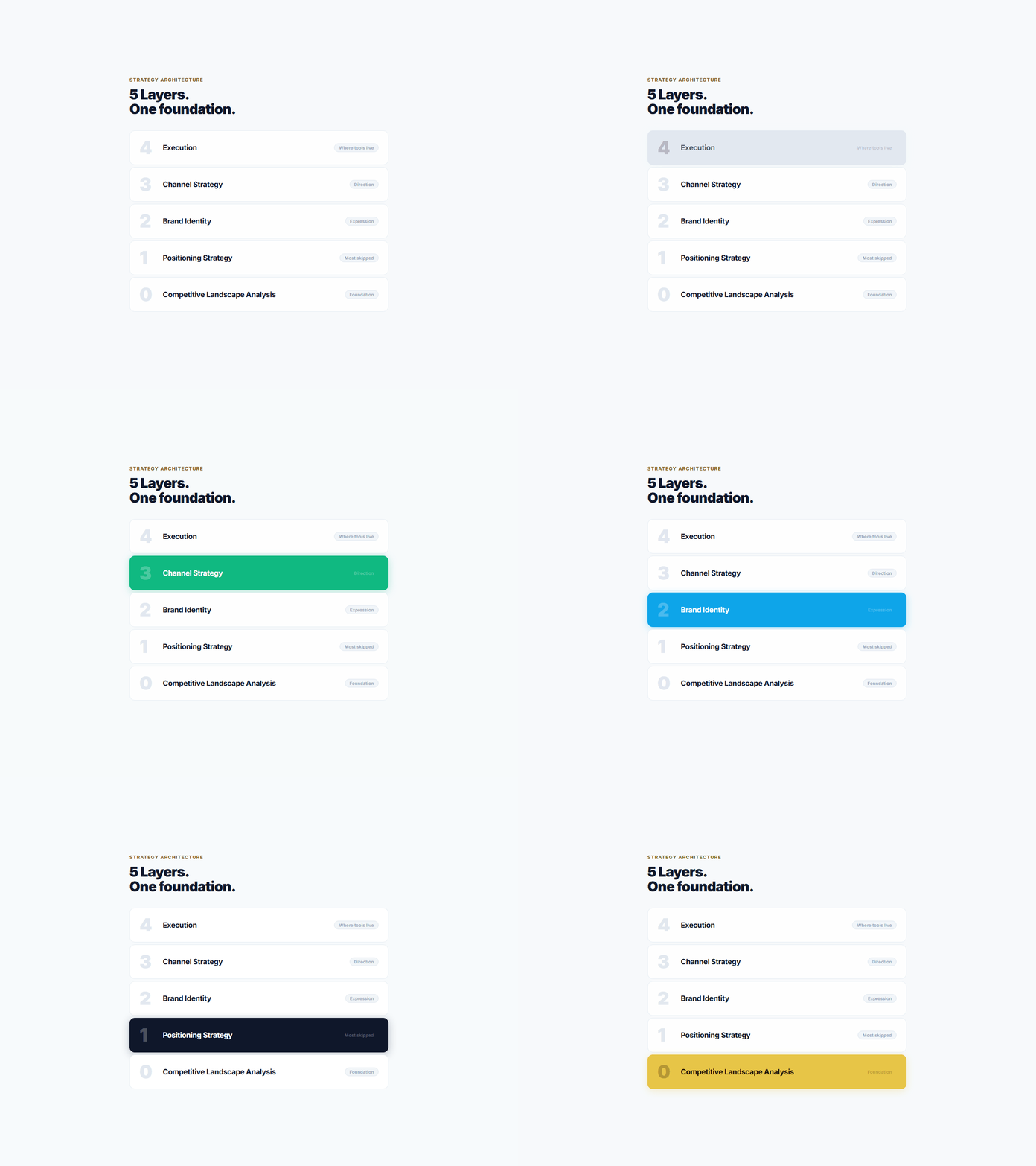
The layers are sequential. Each one is built on the one below it. When lower layers are skipped or done shallowly, everything above becomes structurally unsound - even if it looks polished.
Layer 0 — Competitive Landscape Analysis
Before any strategy is possible, you need to understand the landscape.
Not what competitors are saying - but why they’re saying it. What territory are they trying to own? What’s the strategic logic behind their communication choices? Which positions are overcrowded? Which are open?
How mature is the market? Is this a category where positions are consolidating - or still forming? What does that mean for where there’s room to compete, and what kind of claim is even credible?
This is intelligence work - not content analysis. It’s about territorial logic. Understanding the strategic choices your competitors have already made so yours can be genuinely informed.
What’s Different About This Layer
Most tools that claim to do “competitive analysis” are actually operating at Layer 4 - tracking what competitors post, which keywords they rank for, what their traffic looks like. Useful data. But it answers “what are competitors doing?” not “what territory are they trying to own, and is that defensible?”
Knowing a competitor writes about “sustainable packaging” doesn’t tell you whether their positioning threatens yours. Tracking their traffic doesn’t map their territorial claims. There’s a gap between what’s being tracked and what actually informs a positioning decision.
Layer 1 — Positioning Strategy
The layer most people skip.
Built on that foundation: which territory will you claim? What will you not claim? Which trade-offs will you accept?
This is where the strategist produces the strategy brief - the document that answers “where do we compete and why” before a single word of copy is written.
The Data on Skipping This Layer
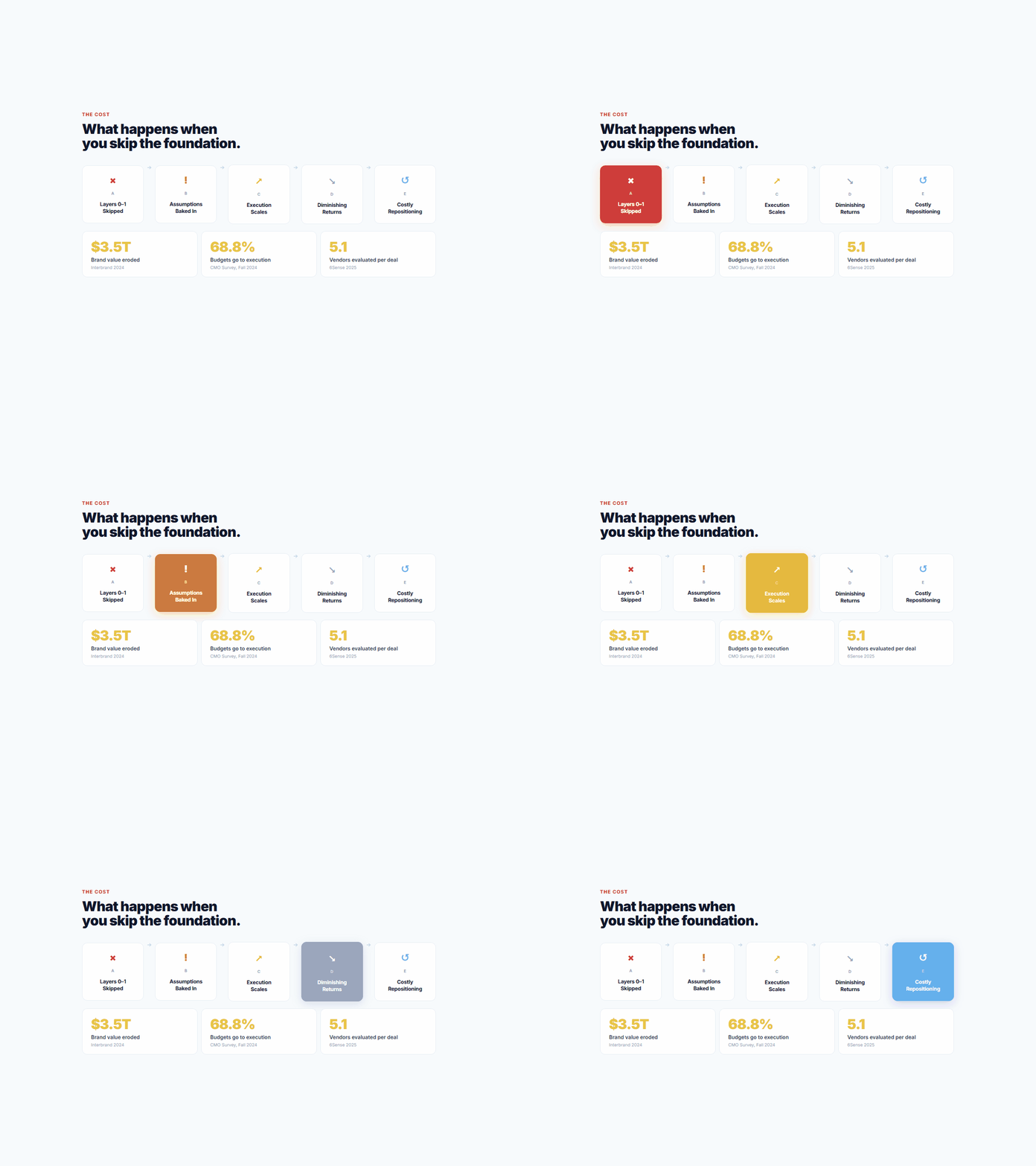
Mark Ritson estimates roughly 90% of marketers never develop a true marketing strategy — they move directly from competitive data to execution.1
Gartner’s 2024 CMO Spend Survey: 64% of CMOs say they lack sufficient budget to execute their strategy. Marketing budgets have dropped to 7.7% of company revenue, down from 9.1%. The gap between strategic ambition and execution capacity is widening.2
The CMO Survey (Fall 2024, Duke University/Deloitte/AMA) puts it at 68.8% of marketing budgets going to performance and tactical work - up from 59.9% the year before.3
Interbrand’s Best Global Brands 2024 report estimates $3.5 trillion in cumulative brand value has eroded over 25 years — the consequence of short-term optimisation displacing long-term brand building.4
The 6Sense 2025 Buyer Experience Report (4,000+ buyers surveyed): buying groups now average 11 people, evaluate 5.1 vendors (up from 4.5), engage in 800+ interactions, and take 10 months on average. More complexity, not more clarity.5
Why AI Can’t Do This Layer
AI can generate 10 positioning territories for you. That’s not strategy. That’s a list.
Strategy is picking one and accepting the consequences of not picking the others.
I learned this doing ideal customer discovery work with founders. I could suggest the perfect prioritisation - backed by data, logically sound, clearly the “right” choice by any objective measure. But if the founder didn’t believe in it, it wasn’t the right choice. A strategy nobody commits to doesn’t get executed. The “suboptimal” choice they believed in always outperformed the “optimal” one they didn’t.
AI doesn’t have skin in the game. It can’t commit - it can only recommend. Strategy requires commitment, accountability, and the willingness to be wrong. That’s not a technical limitation. That’s a human one.
The Deliverable at This Layer
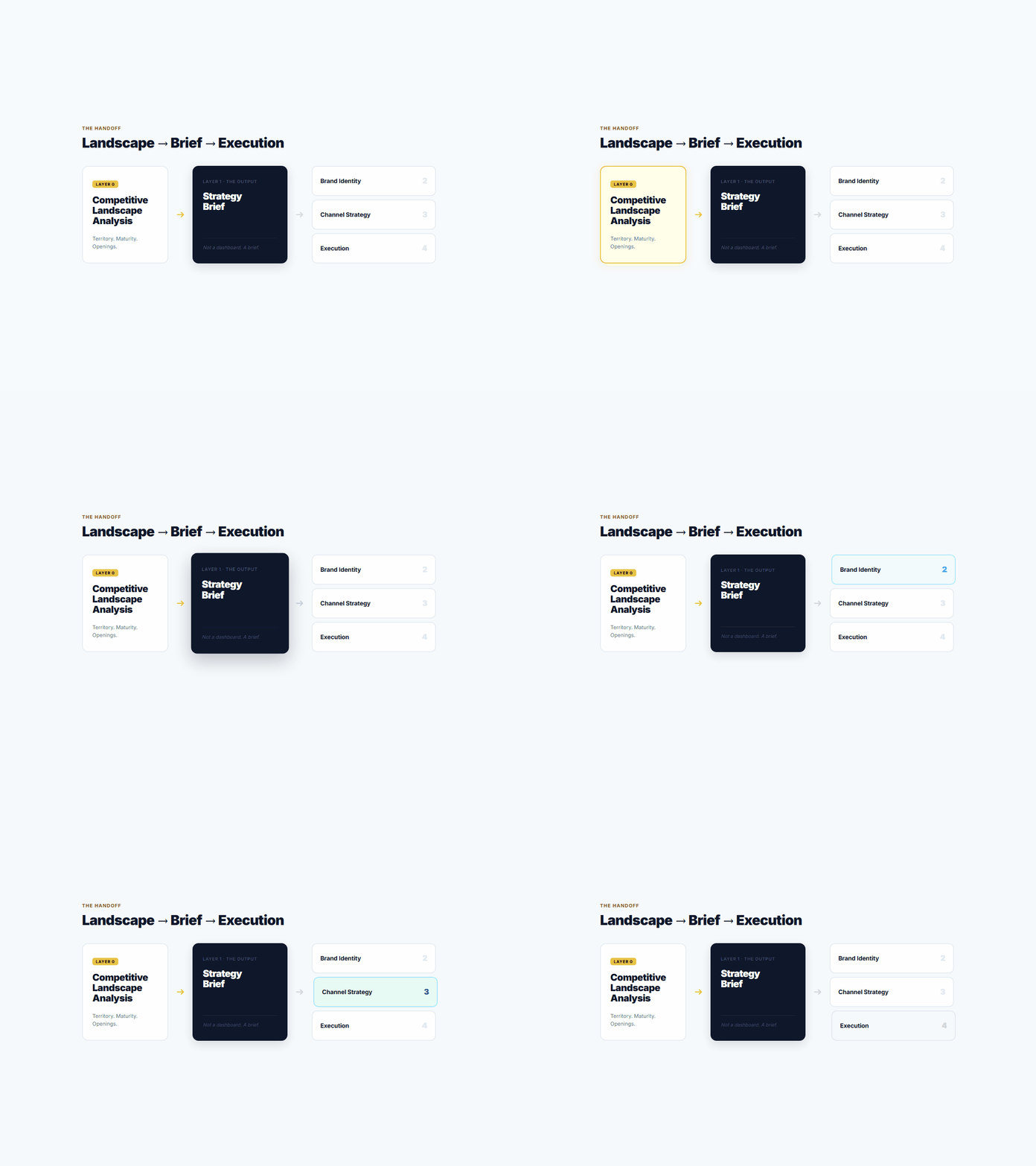
A strategy brief. Not a dashboard, not a data export, not a report. A brief - curated, strategic, actionable, and presentable to clients and stakeholders.
In agencies, the strategist hands the creative team a brief. That brief should be grounded in what the competitive landscape actually tells you - not just what competitors are saying, but why they’re saying it, and what it means for where your client can credibly compete.
The copy, the visuals, the tone - those should flow from that foundation. Not precede it.
Layer 2 — Brand Identity
The strategy brief lands with the brand team. Now: how does this positioning express itself visually and verbally?
Tone of voice
Visual identity - logo, colour system, typography
Brand personality and emotional register
The “how we show up” across every touchpoint
This is what most people mean when they say “branding.” And it’s genuinely important - but it only works when it’s coherent with the strategy brief. Brand identity built without a positioning foundation is aesthetic without direction. It can look polished and still be anchored in the wrong territory.
When people conflate “positioning” with “branding,” they’re often confusing this layer with Layer 1. Positioning is the strategic choice. Branding is how that choice expresses itself.
Layer 3 — Channel Strategy
Which channels? Why these and not others?
This still involves real strategic thinking - but applied. Where does your ICP make decisions? Where do different audience segments gather information, build trust, and evaluate options? A B2B enterprise buyer doesn’t follow the same journey as a consumer brand’s customer. A niche professional audience requires different channels than a mass market.
Channel strategy is real strategy. It’s just downstream of positioning - not a substitute for it.
Layer 4 — Execution
Now the execution layer runs. This is where the AI-powered tools live - and they’re good at what they do.
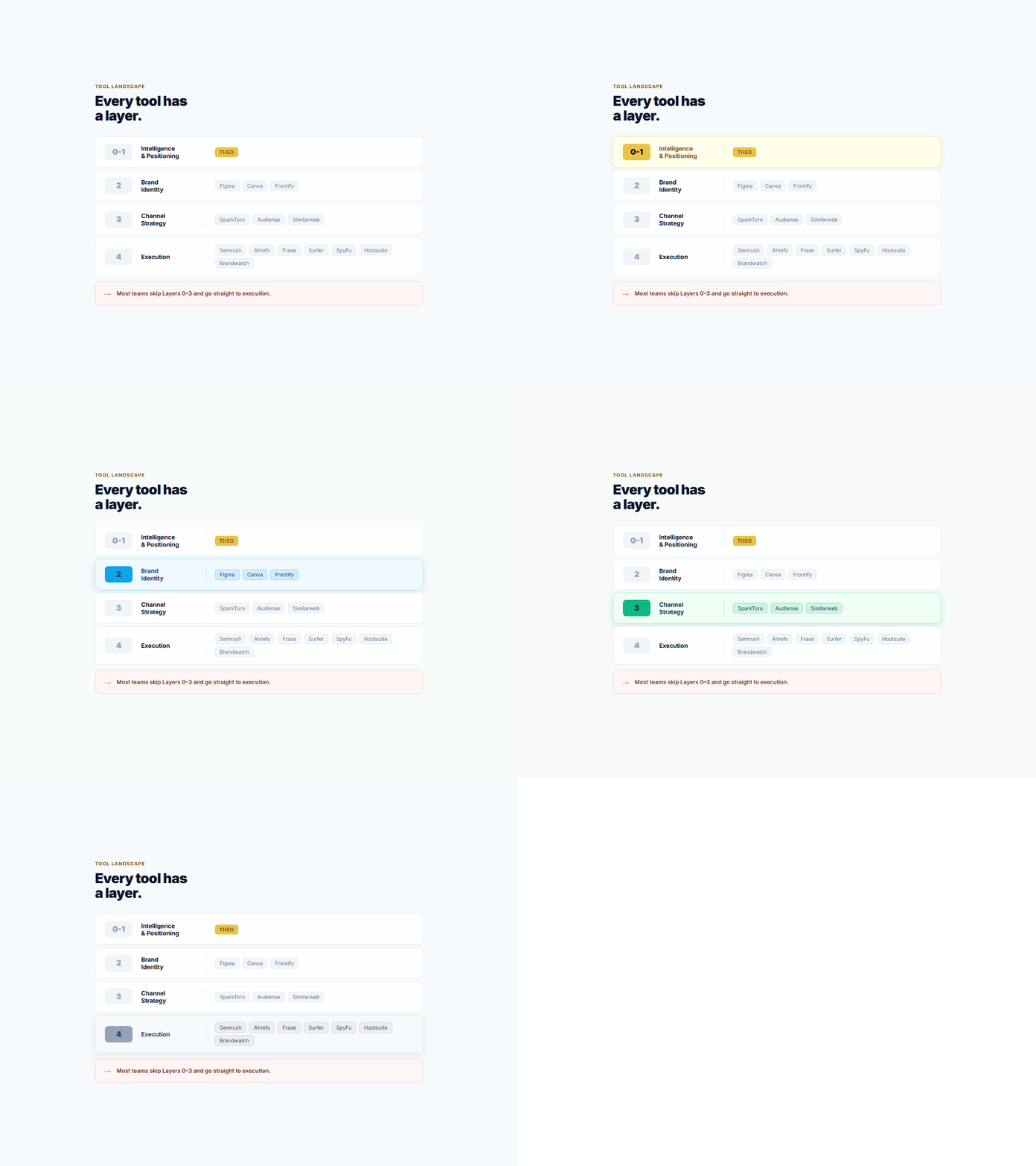
These tools analyse thousands of data points, surface content gaps, optimise for rankings, identify what’s working. They turn competitive data into actionable execution tasks. Fast, structured, useful.
The Important Nuance on Keyword Research
Even SEO work - which lives at the execution layer - should flow from the positioning foundation. Keyword research isn’t separate from brand strategy. It’s brand strategy applied at keyword level.
The question isn’t just “which keywords have volume?” It’s “which keywords serve the territory we’ve decided to own?” The keyword landscape - which phrases are overcrowded, which are emerging, which are uncontested - mirrors the competitive territory analysis at a more granular level.
When it’s disconnected from the positioning foundation, you end up optimising for traffic in the wrong territory. Efficiently, consistently, and at scale.
When Does Each Approach Apply?
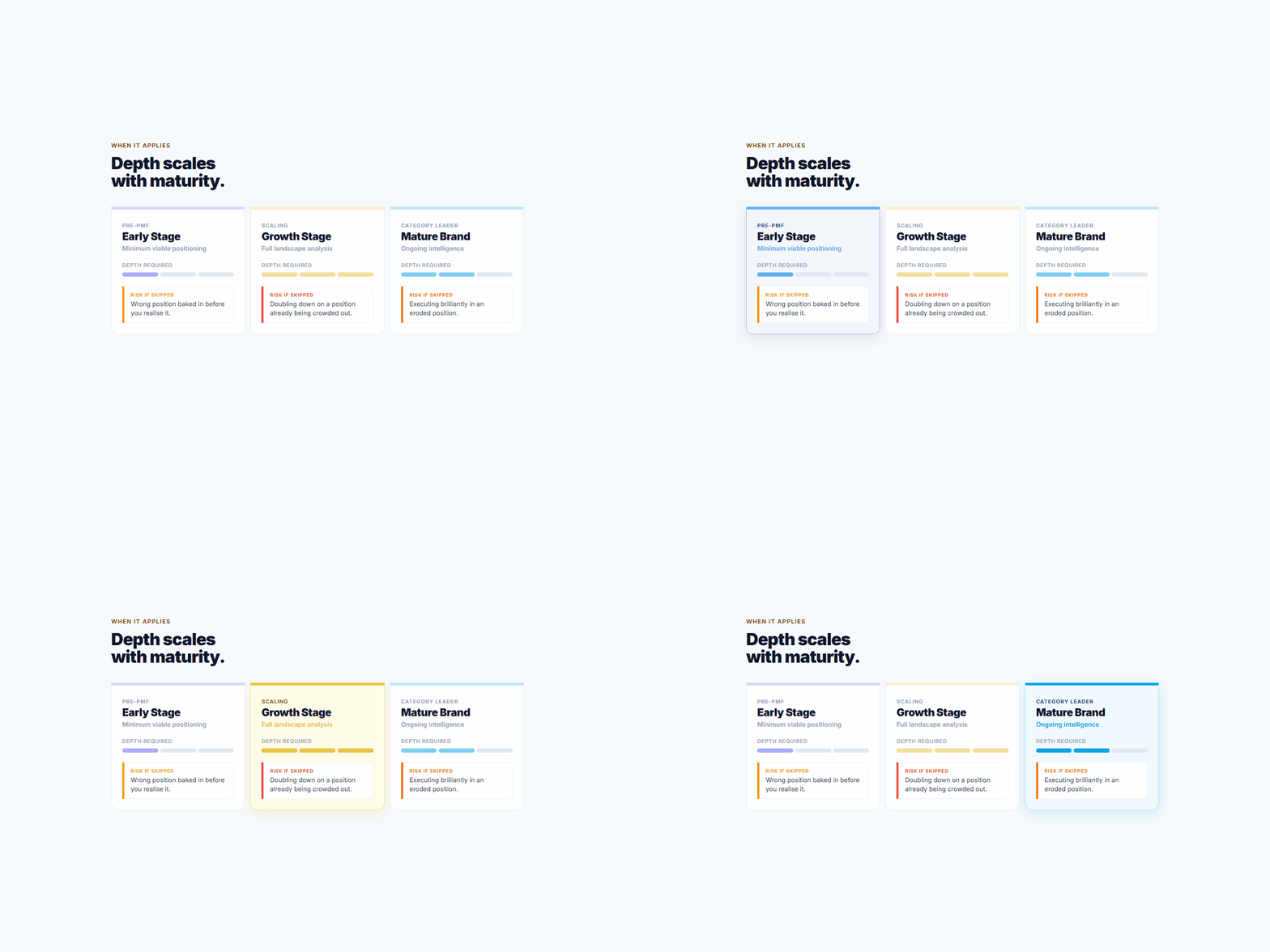
The depth of Layer 0–1 work scales with business maturity and competitive complexity. The need for each layer never disappears — but the investment should match the stakes.
The constraint for startups isn’t “we don’t need this.” It’s that the competitive landscape is simpler and resources are limited. But skipping Layer 1 entirely here is the most expensive mistake: you bake the wrong position into your product, naming, and messaging before you realise it. Repositioning later costs far more than getting it roughly right early.
The Reaction I See When I Share Positioning-Level Work
When I share analysis at this depth - territory mapping, competitive relationship patterns, positioning landscape - the response splits cleanly:
From marketers: “This is impressive - but we don’t go this deep.”
From brand strategists: “This is exactly what I’ve been trying to explain to clients for years.”
Neither reaction is wrong. These are different jobs, serving different layers.
The problem isn’t that marketers do execution-layer work. That work is necessary, valuable, and increasingly well-served by excellent AI tools.
The problem is when the positioning layer gets skipped - and execution-layer analysis gets presented as the strategic foundation. When that happens, smart tactical work ends up optimising for the wrong position.
The most dangerous competitive situation isn’t a brand that’s executing poorly. It’s a brand that’s executing brilliantly in the wrong direction.
One Question Worth Asking
Do you know which layer your “strategy” work actually lives in?
Not as a criticism. As a genuine diagnostic. Because the answer determines what’s missing - and what kind of work would actually change the competitive position, not just improve the execution of it.
This is the foundation THEO StrategistOS is built on — not competitive monitoring, not content gap analysis, not keyword research. The intelligence layer that makes positioning decisions defensible before the strategy brief is written, and coherent before the execution begins.
References
Mark Ritson, “If most marketers don’t do strategy, how do we fix it?” Marketing Week, October 2021. ↑
Gartner, “Annual CMO Spend Survey,” 2024. CMO marketing budgets dropped to 7.7% of company revenue (down from 9.1%); 64% of CMOs report insufficient budget to execute their strategy. ↑
Christine Moorman, “Marketing Budget and Job Growth Rebound,” The CMO Survey, Fall 2024 (33rd edition), Duke University Fuqua School of Business, co-sponsored by Deloitte & AMA. ↑
Interbrand, “Best Global Brands 2024: Growth at What Cost?” October 2024. ↑
6Sense, “2025 Buyer Experience Report,” 2025. Based on 4,000+ B2B buyers surveyed. ↑